



No fewer than eleven projects and initiatives were presented at the tech day run by the Group Scientific Committee, steered by the Group’s scientific advisor Evelyne Osmani. The event took place on 16 May in the salons of the Maison des Arts et Métiers in Paris.
The rich and varied presentations were a testament to the “diversity of the Group’s expertise and its unfailing ability to innovate in order to adapt”, as pointed out by Benoît de Ruffray. Praising “the differentiating solutions presented, often by multidisciplinary teams,” he highlighted the importance of “promoting technical nuggets beyond major flagship projects and sharing solutions that otherwise run the risk of remaining confidential”.
LEADING EXPERTS
He also pointed out that “leading experts are crucial for the Group’s development, because it is easier to develop synergies between them than between their bosses”. He called on the Scientific Committee, which going forward will be chaired by Vianney Fullhardt, to expand this experience feedback and continue opening this event to international subsidiaries, given the key role of technology in the success of business. “We need to take advantage of ecological and digital transition to move forward, develop variants to stand out, look for the next solution, while at the same time accelerating deployment of innovations”, he added, in order to “maintain our ability to work together to create surprises”.
 TECHNICAL ACHIEVEMENTS
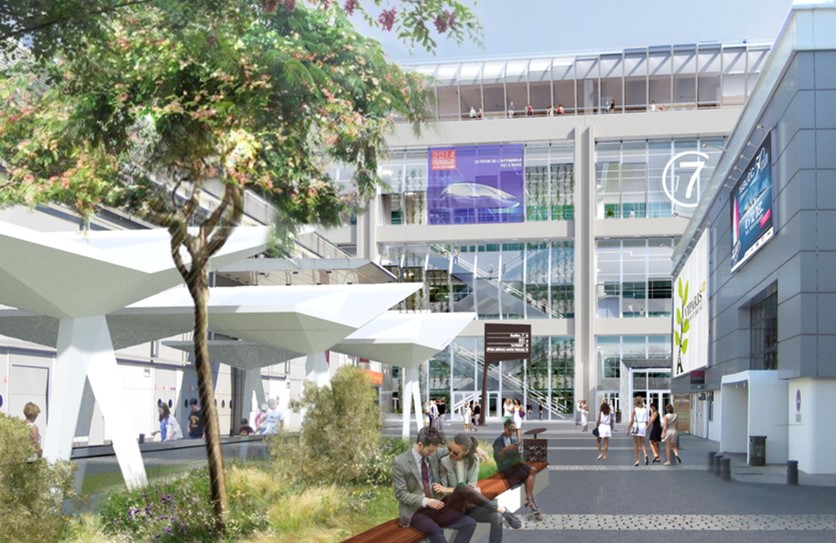
In terms of Construction, Philippe Baudet, Walid Bensmaine and Thomas Collet-Fenestrier (Construction division) presented solutions for dismantling the pre-stressed beams used during work on Hall 7 of the “Parc des Expositions” exhibition centre in Paris.
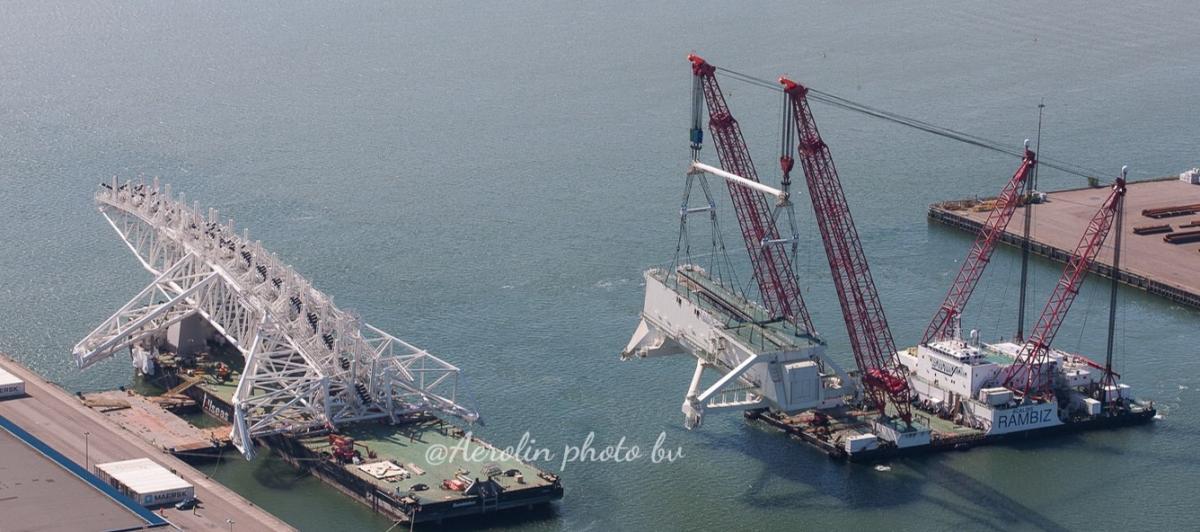
Patrick Maes (Infrastructures division, Smulders) described the impressive 4,200-tonne, 150-metre long and 65-metre wide “stinger”, built by Smulders to guide metres of pipework to the ocean floor, and which was installed downstream of an offshore platform after being transported on two different barges.
 GEOMETRIC CONTINUITY
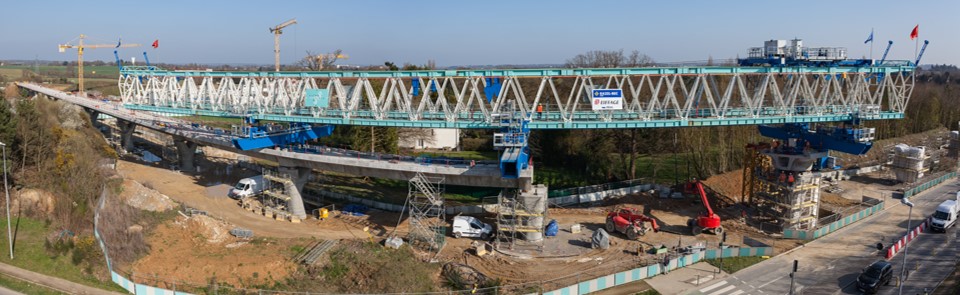
In terms of the Infrastructures business, two viaducts were under the spotlight. The Rennes metro system urban viaduct, which is particularly complex due to its incline of up to 10 % and pronounced slope of up to 5%, and very tight bend, as explained by Matthieu Carry, Luc Defaucheux and Didier Koenig (Infrastructures division), required a reworking of the original design and the prefabrication of more than 900 segments that were literally built one up against the next, in order to ensure good geometric continuity.
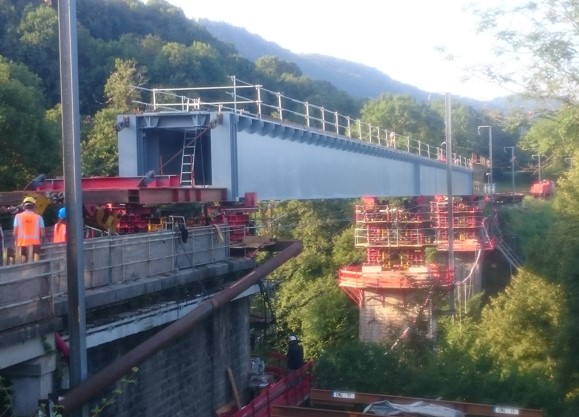
Lionel Bogner (Infrastructures division) described the lightening operation carried out during summer 2016, to replace the century-old Grenant Viaduct (Savoie) with a new structure whose weight had been optimised (300 tons in the end), over a period of just 10 weeks. Dismantling of the old and construction of the new bridge was carried out practically at the same time; the jack for the old bridge measured over four metres high.
PRÉFABRICATION ET PLATEFORME D’ESSAIS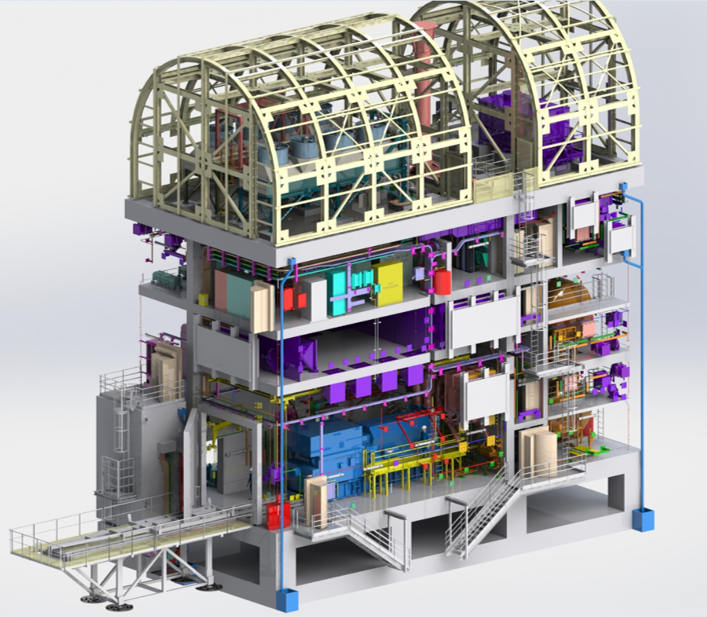
Marc Kurc (Energy division) gave a detailed presentation on the DUS emergency diesel units (contract worth €549 million), installed to reinforce security at French nuclear power plants as part of post-Fukushima measures, and which include in addition to motors and generators, electrical and mechanical auxiliary systems, sensors, safety and air-handling systems and control-command systems. Two years of design and qualification studies were required, followed by three years of assembly and testing - prefabrication having been pushed to the limit and a full test platform installed. 3D imaging was used to improve interaction with the project owner EDF.

Another very large contract (worth €200 million) was presented by Stéphane Dandoy (Eiffage Génie civil), Adolphe Gonzales (Eiffage Métal) and Sébastien Grandjean (Clemessy), who described the consortium set up by Eiffage, French energy producer Engie and Italian company Icop, and which also included Belgian, Spanish, Rumanian and Czech Republic companies, to construct the new launch unit for the future Ariane 6 programme - including the launch pad (1,300 tonnes and 30,000 sq. m of concrete), the launcher assembly building, and the metallic structured mobile gantry (8,300 tonnes fully equipped). The consortium will also be building four lightening protection masts and installing 3,700 lighting units.
ECOLOGICAL AND DIGITAL TRANSFORMATION
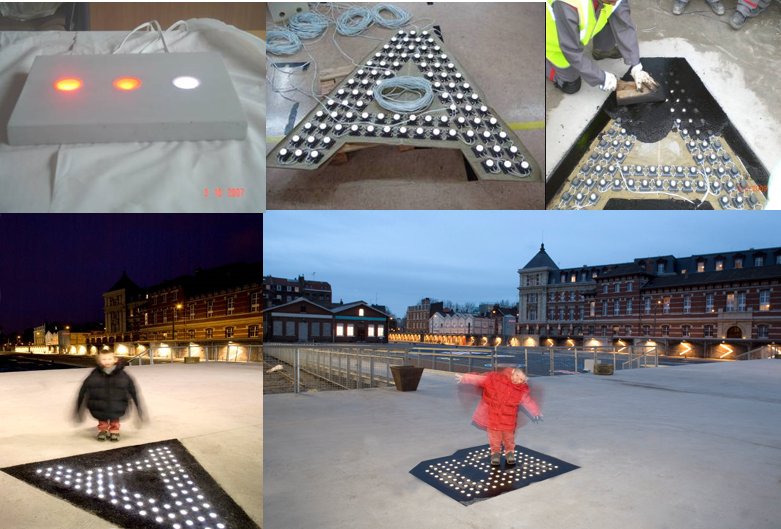
Flavien Geisler (Infrastructures division) and Christian Gavillet (Energy division) explained how “Lucioles” (luminous pads that allow the creation of horizontal road signalling, but which did not find a market when they were launched in 2008-2009), can now be integrated into a global infrastructure management system for local authorities, ExperCité, in order to improve safety on dangerous bends, develop smart parking and even allow real-time allocation of lanes according to traffic, particularly during rush hour.
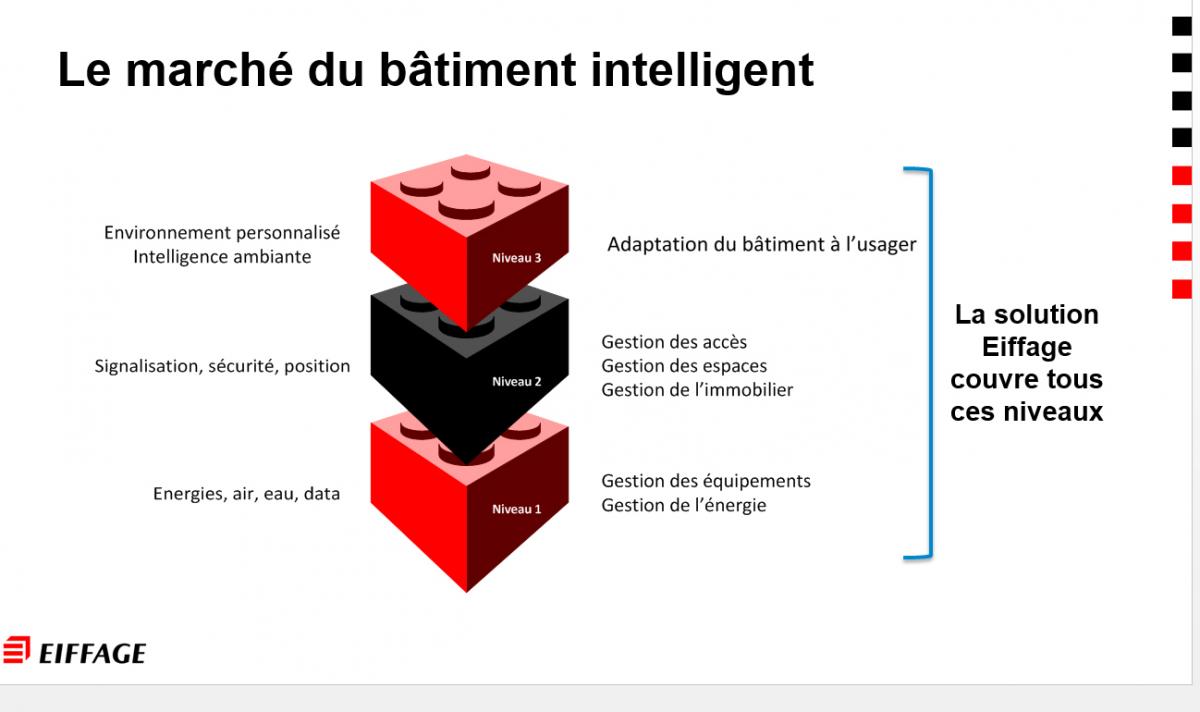 In the field of smart buildings, R&D is more than ever at the forefront, because systems need to be open and connected to the outside, as recommended by Jean-Michel Grave, so that buildings remain living systems. A reference framework will be defined, making it possible to determine the prerequisites for a connected building, explained Thibault Merlier (Energy division). The smart building market covers three different levels in this respect: energy, water, air and data (level 1); signalling, safety, position (level 2); adapting the building to the user (level 3).
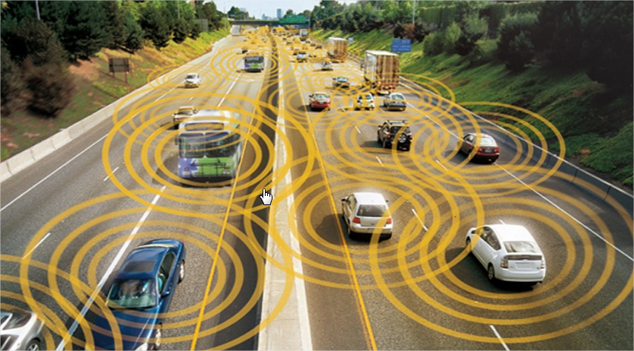
Christèle Million and Éric Pillet (APRR) presented the European C-Roads project linking connected vehicles and smart roads, which aims to improve road safety by setting up a cooperative intelligent transport system (C-ITS); France is already one step ahead with its Scoop platform. The main challenges are interoperability and harmonisation of services, as well system security.
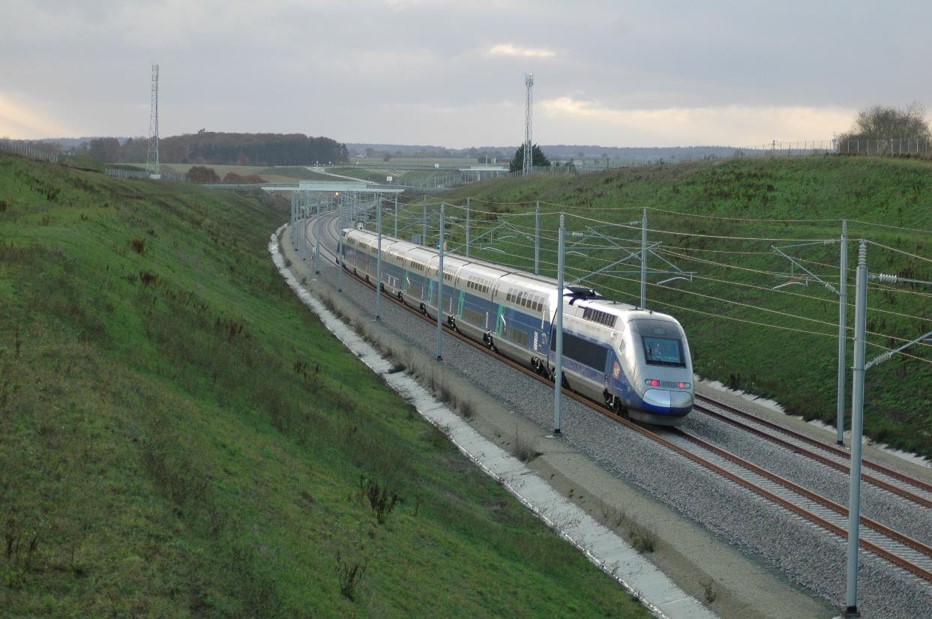
The very large BPL high-speed train link project, which has just come to a close with the line becoming available on Monday 15 May, was also centre stage. Florent Janssen (Infrastructures division) detailed the commissioning process that took a year to complete, to ensure compliance of the 212 km of railway lines with operational and contractual requirements. With two interacting sectors (civil engineering and railway systems), collaboration with GIE Eurailtest was required to ensure that each subset was operating correctly and that the interaction between each subset was also operational. Speed tests in November 2016 were particularly crucial. Benoît de Ruffray took this opportunity to praise the teams led by Marc Legrand, which helped to complete the largest project ever undertaken by Group.
